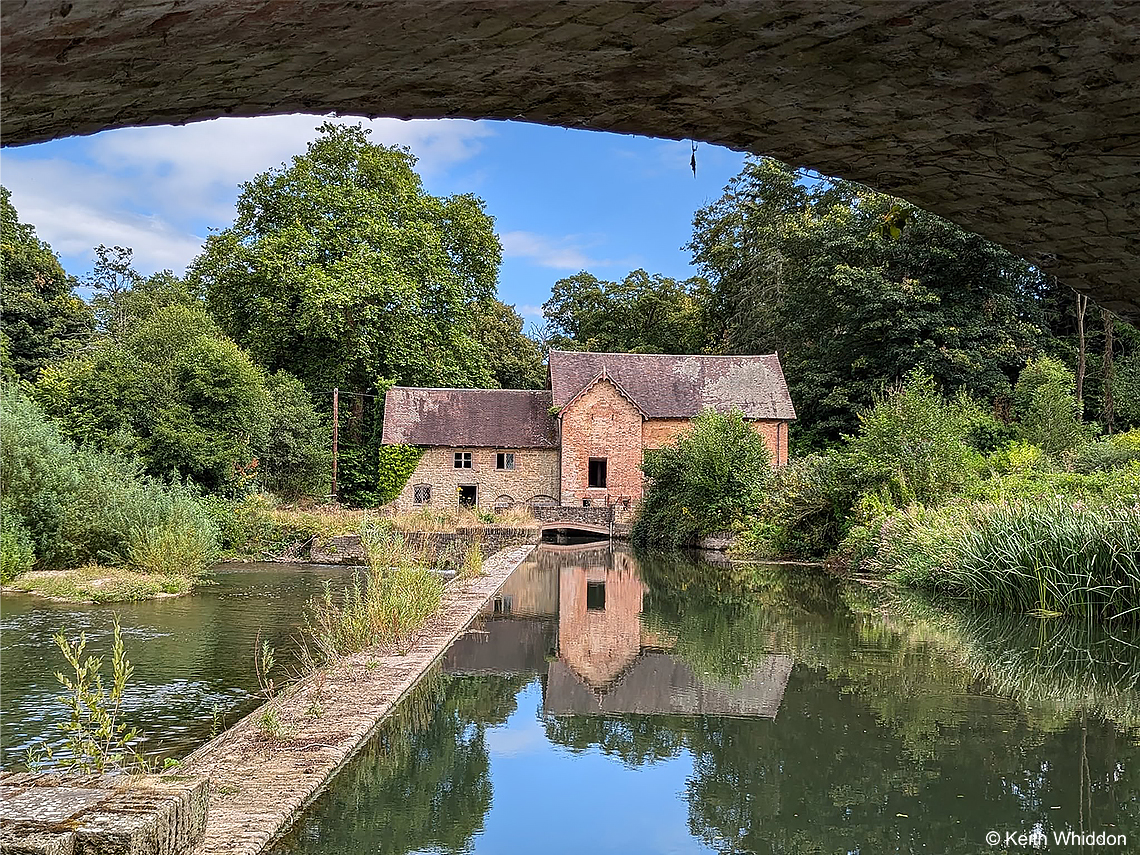
‘Bromfield Mill’ – Bromfield, Shropshire
Hidden from view of the
busy A49 road, Bromfield, near Ludlow has a timeless quality. Bromfield Priory
is mentioned in the Domesday Book, although after a fire in the 1600’s, all
that now remains is St. Mary the Virgin's Priory Church and the imposing 14th
century gatehouse.
Following the dissolution
of the monasteries in 1541, the church was leased to Charles Foxe who converted
it into a house. Part of Foxe's 16th century house remains as a ruin
attached to the church. In 1672, Thomas Francis painted the remarkable ceiling
of the chancel depicting the Shield of the Trinity surrounded by cherubs and
texts, with angels holding a bible open at Psalm 85.
Near the church lies the
entrance to Oakly Park, once the 'chase' of Ludlow Castle, acquired by Robert
Clive in 1771 who employed Capability Brown to design its grounds.
Below the wonderful 18th
century carriage bridge over the River Teme, lie the ruins of 2 mid-1800’s
watermills: a small sawmill, which still houses its original circular saw and once
had its own waterwheel; and a larger corn mill with an attached bakery. These
were powered by an unusual V-shaped weir in the river.
Today the corn mill looks
like a scene from a Constable painting - a very beautiful and quintessentially
English setting.
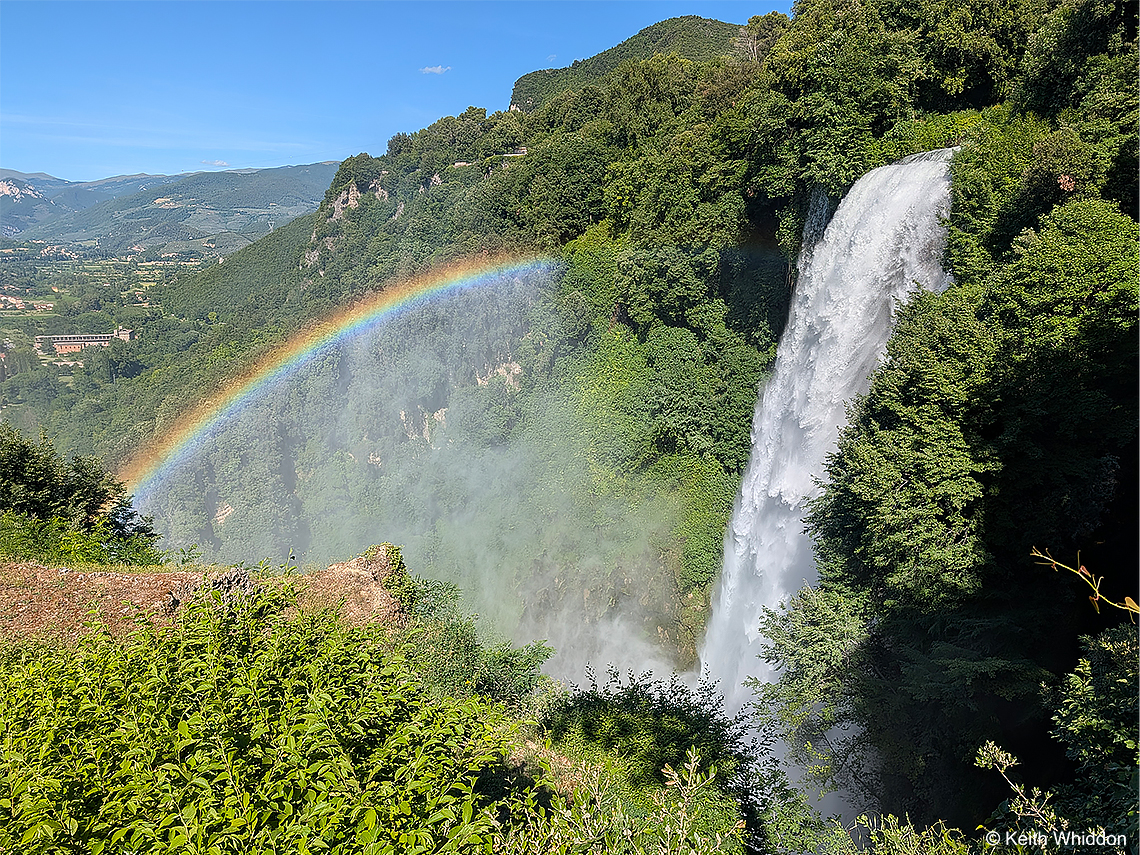
‘The Marmore Falls/Cascata delle Marmore’, Umbria, Italy
Dropping an impressive 165
metres, The Marmore Falls is the tallest man-made waterfall in Europe and one
of the largest in the world. In 271 BC the Roman Consul Manius Curius Dentatus (said
to have been born with teeth) ordered the excavation of the Cavo Curiano Canal
to drain the stagnant swamps threatening the Rieti Valley, by diverting their
waters so they dropped into the gorge of the River Nera. The Velino River was
rich in calcium carbonate and had deposited huge amounts of calcite in the form
of tufa, which the Italians call travertine, similar to how stalactites are
deposited. This had choked the river and caused the swamps. In fact some
waterfalls did exist naturally here before man intervened, as may be seen by
the tufa deposits of fossil waterfalls in the cliffs of the Nera Gorge.
Today, the water flow is
controlled by the local hydroelectric plant. Because the river water is now diverted
to generate power, the waterfall operates on a highly specific schedule.
Instead of flowing continuously, it is ‘turned on’ and ‘off’ daily, by opening
valves to let the Velino River cascade down into the Nera twice a day for
tourists.
Before the construction of
the dam above the Falls, the uncontrollable flow of water caused flooding
problems downstream. When the valves are opened today the water flows at 50
cubic metres/second, whereas prior to the dam the flow ranged between 80 and a
huge 300 cubic metres! In 1787, at the initiative of Pope Pius VI, architect
and engineer Andrea Vici intervened directly on the structure of the Waterfall.
He shaped the 3 scenic drops that we see today and ensured a steady water
flow.
The Falls became a famous
stop on the European ‘Grand Tour’, attracting prominent writers and artists,
including J.M.W. Turner and Lord Byron, who famously dubbed them as a ‘sublimated horror’, capable of evoking
powerful and conflicting emotions.
The park surrounding the
Falls is superb. There are numerous trails of varying difficulty and
viewpoints. On my visit, the Falls were turned on between 3pm to 5pm, heralded
by sirens. It is spectacular and awe-inspiring, if not ‘sublimated horror’!
 watch a video of the falls
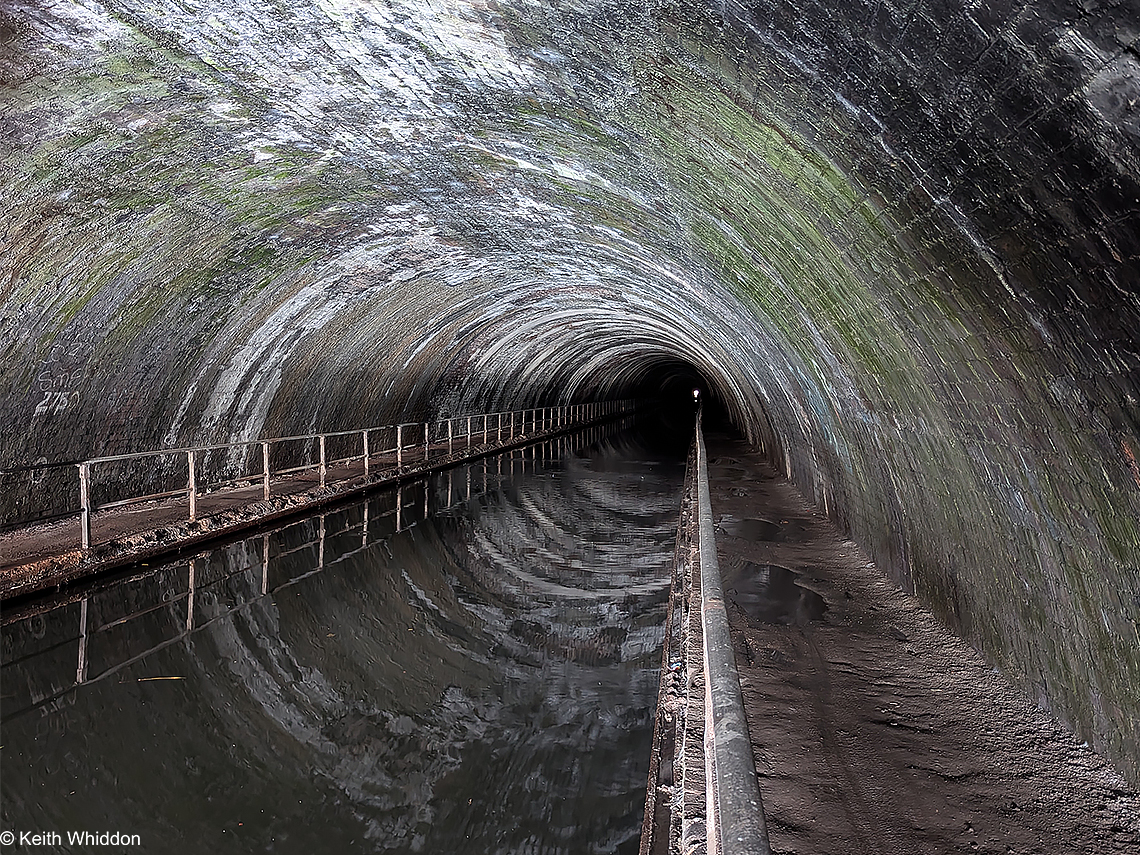
‘Netherton Canal Tunnel’, Dudley, W. Midlands
At 2.8 kilometres in length, Netherton Tunnel is the 3rd longest
canal tunnel in the UK. It was the last canal tunnel to be constructed in
Britain. It opened on 20th August 1858, and was built to relieve the
bottleneck of the nearby old Dudley Tunnel, which is very narrow and had
typical waiting times of between 8 hours and several days.
Built of 27 million bricks and with a width of 8.2 metres it allowed 2-way
working of narrowboats. Originally lit by gas and later electricity, it has
towpaths on each side, which enabled horse-drawn narrowboats to be pulled
through. 9 men died and 18 were seriously injured during its construction.
The air vents that run along the line of the tunnel to provide
ventilation are known locally as ‘Pepper Pots’ because of their shape. Today
the hilltop is mainly covered by modern housing, leaving some of the Pepper Pots
now oddly located in people’s gardens, or on a roundabout!
The tunnel is 108 metres at its deepest and renowned for being a dark
and spooky journey, especially for the solo traveller. It took me 1 hour to
walk right through - allowing time for plenty of photos of course.
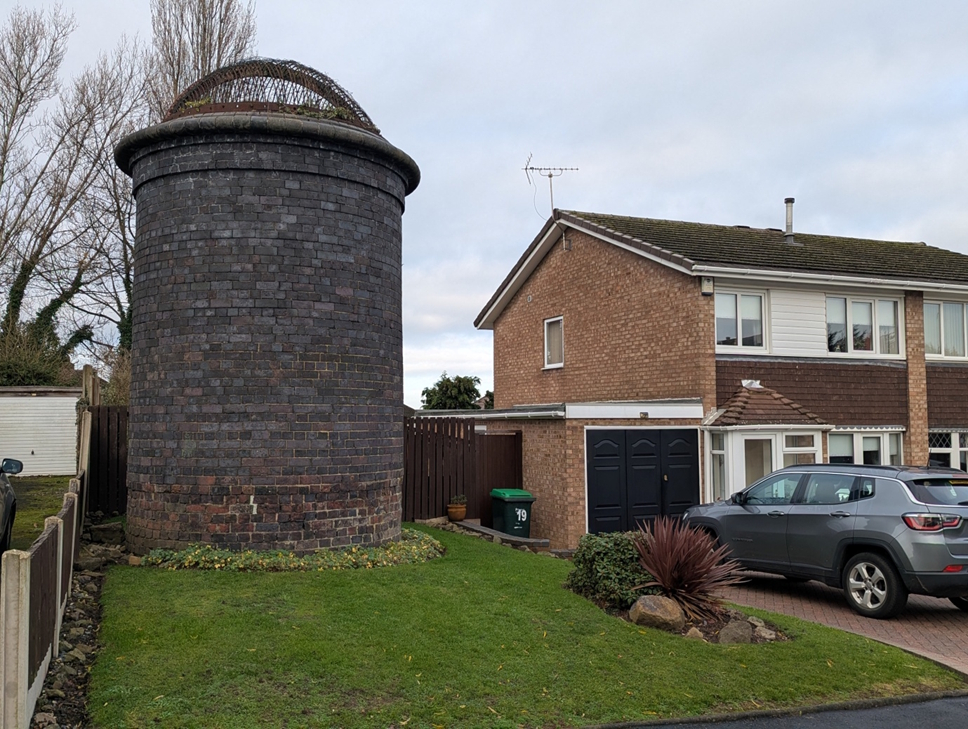
One of the ‘Pepper Pot’ air shafts now strangely located in a suburban front garden. I wonder if the owners know what lies 108 metres beneath their house? (photo by Keith)
‘Pont Minllyn’, Dinas Mawddwy, Mid-Wales
The mossy green appearance
of this old 2-arched bridge gives it a fairy-tale feel, but it was actually
built for practical reasons in the early 17th century, to allow
packhorses to cross the River Dyfi. Nowadays, people drive by along the A470
north–south trunk road unaware of its close presence.
Pont Minllyn’s construction
was paid for by Dr. John Davies, rector of Mallwyd, one of the most prominent Welsh
scholars of the era. He is believed to have had a hand in translations of the
Bible and the Common Book of Prayer into Welsh, as well as publishing his own
book of Welsh grammar.
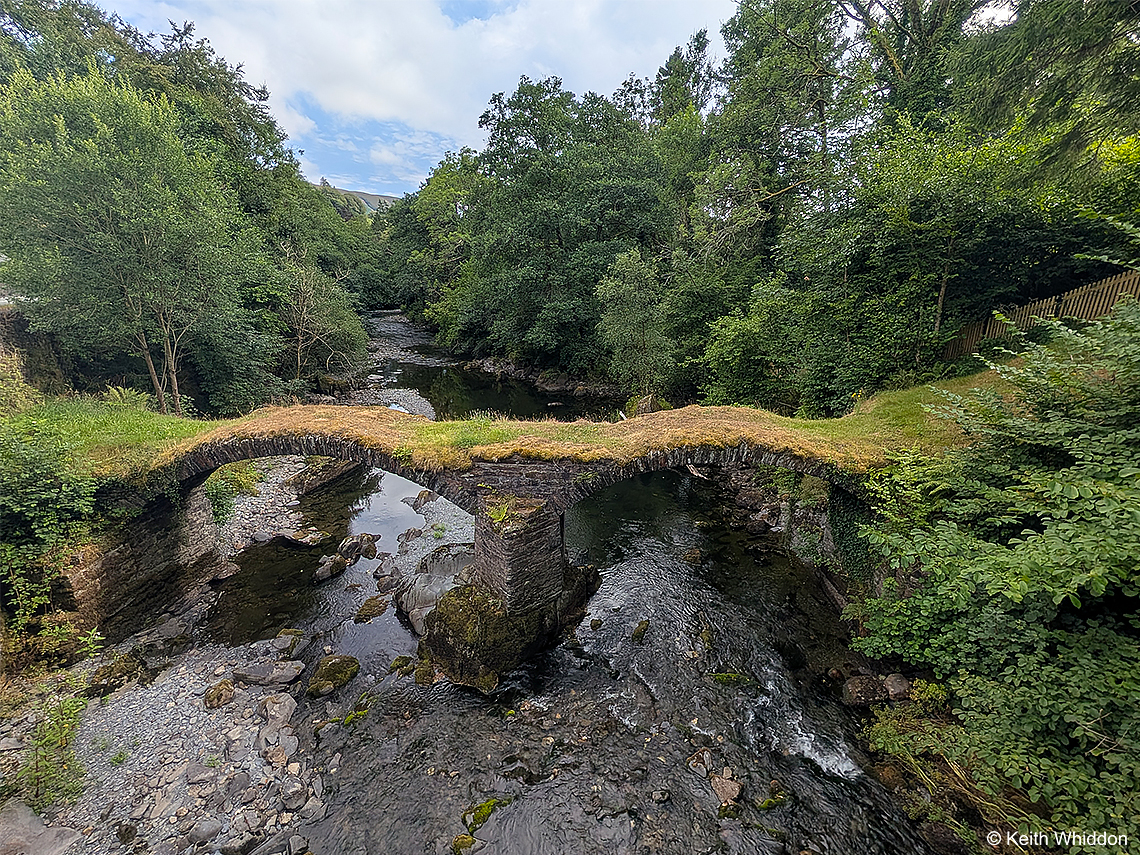
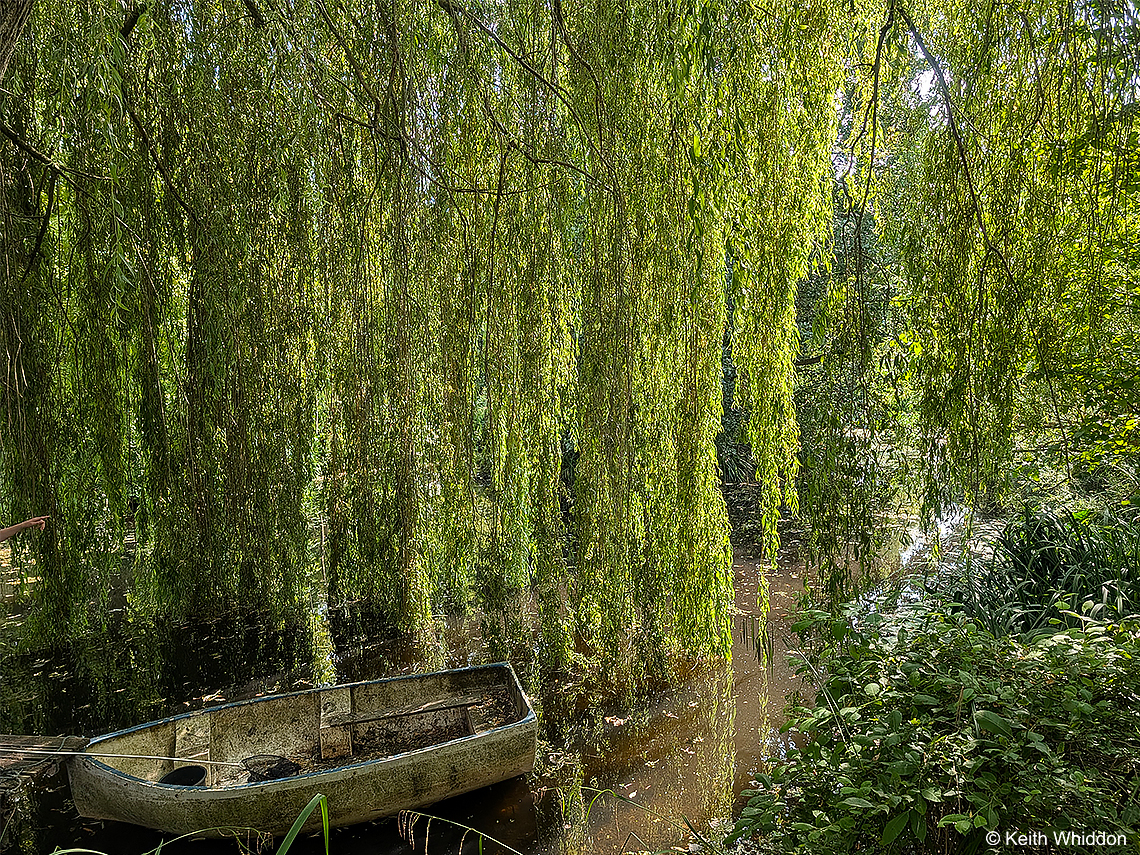
‘Monet Pond’ - Westonbury Mill, Pembridge, Herefordshire
Westonbury Mill Water Gardens were created in 1997 by retired water
engineer Richard Pim and his partner Sally. Set along the Curl Brook, this 5 acre
garden transformed a neglected mill leat into a series of streams, ponds, and whimsical
follies, including the world’s only water-powered cuckoo clock.
Here the ‘Big Pond’, flanked by massed groups of
moisture-loving plants and shaded by willows, the Pond resembles a scene from a
Monet painting.
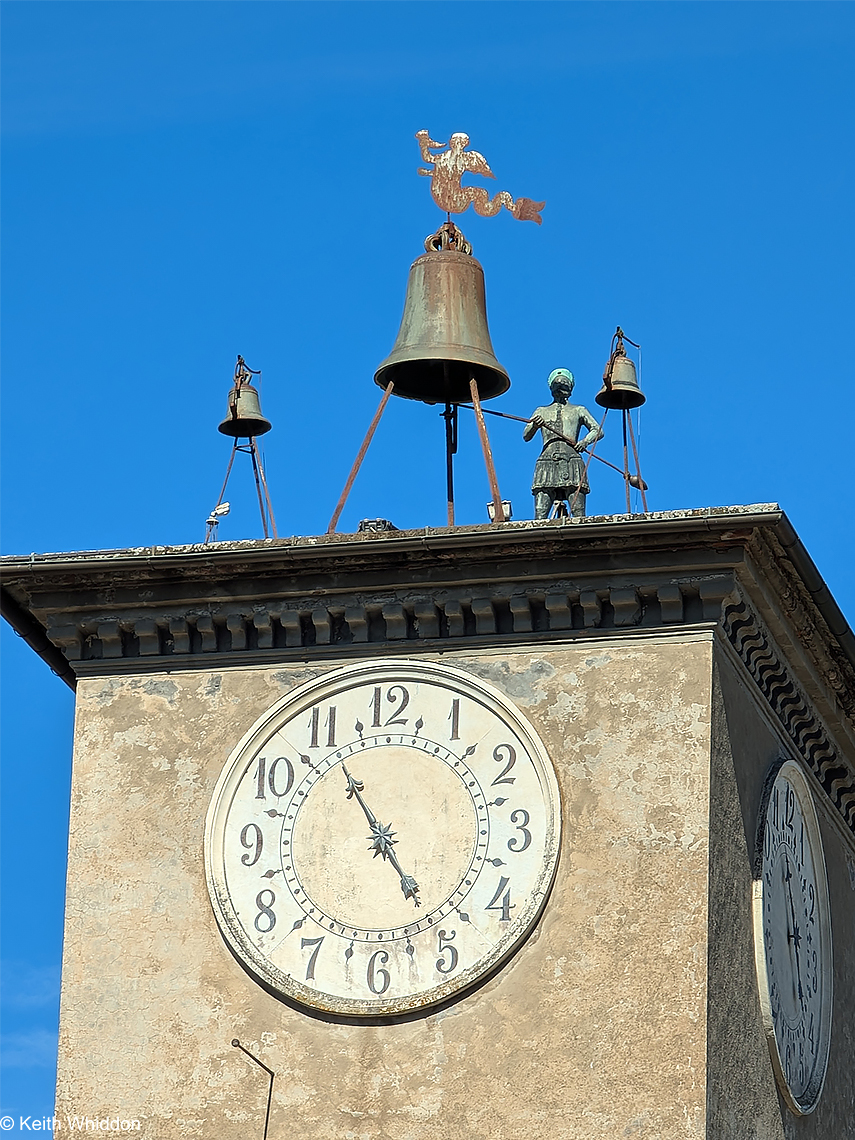
‘The Jacquemart of Orvieto', Umbria, Italy
Overlooking Orvieto Duomo
is the Torre di Maurizio and on its top a bronze figure of a man has been
ringing the bell every hour since 1347. For he is a ‘Jacquemart’, an automaton bell-ringer and
Orvieto's Jacquemart is thought to be the oldest in existence.
The tower was built by
order of the Opera del Duomo when construction work on the cathedral had just
started (‘Maurizio’ being a corruption of the Latin muricium meaning a
building site in this context). The clock tower was used to keep the workmen on
time and it is believed that this is the first example of the concept of
shift-work.
Our Jacquemart is dressed
as a worker or perhaps a foreman, not an angel, nor noble figure, but like one
of those whose time it was managing. On his belt is inscribed ‘Between you and me, bell, let's make a pact:
you are here to cry out and I am here to act’ and in return the bell’s
inscription reads ‘If you wish me to respect the pact, hit me softly, or I will
break and you will have hit me in vain’.
I tried but failed to
capture the Jacquemart at work. He caught me out by coming to life unexpectedly
early. I forgave him given that he's been working for 677 years and must therefore
have hit the poor bell some 6 million times!
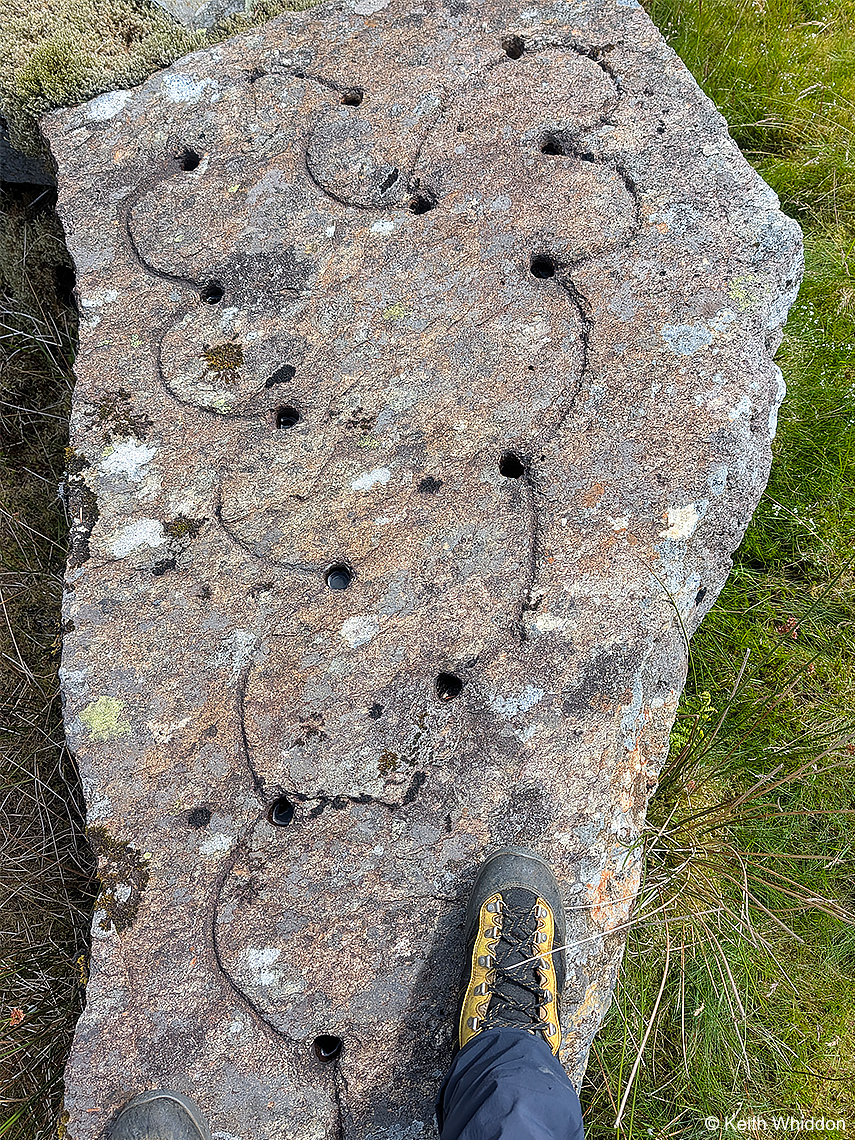
‘Rock Cannon’, Rhiwbach Quarry, Ffestiniog, N. Wales
This stone is not of Celtic origin, but one of 3 rock cannons at
Rhiwbach Quarry used to celebrate special events with loud bangs and flames.
Rock cannons were fired to mark events such as:
· the laying of the first stone on the Ffestiniog Railway in 1832;
· the Diamond Jubilee of Queen Victoria and subsequent
coronations;
· the Prince of Wales on his visit to Blaenau Ffestiniog in 1923 said: ‘I have never seen anything more wonderful –
never’;
· Queen Victoria visited Llanberis in 1832.
The newspaper report of the
rock cannon tribute to Queen Victoria's visit reads: ‘Upon
the application of a match, countless successive explosions took place which reverberated
in a fearful manner among the mountains. The fire glanced along the rocks like
flashes of lightning, followed by explosions, the hollow rumbling of which can
only be compared to repeated bursts of thunder.’
The holes were drilled to a depth of about 5 inches, filled with 2
ounces of black powder, and crushed stones known as ‘stemming’. A quill filled
with black powder was inserted as a fuse. Then more powder was laid along all
the grooves that link the holes together. When the powder was lit (at the
bottom groove in this photo) the flame travelled along the groves igniting the
explosives in each hole in turn to create loud bangs and firework-like plumes of
light. It was a highly skilled operation: too little stemming and the
explosions would be damp squibs; too tightly packed with stemming and the rock
would be blasted to smithereens.
Because this boulder is quite small, in order to create a sufficient
delay between each explosion, the grooves were cut into these elaborate
curves.
235 similar rock cannons have been found in the slate quarrying areas
of Gwynedd, but they may also be found in other parts of the country. In Cornwall
they are known by the wonderfully descriptive name, ‘Merriment Holes’.
 TOP
TOP